
Quinta Terramay
Bone broth: what science says, and what it doesn't
Bone broth is popular and comes with many promises. Here we separate what research knows from what it does not yet know. One distinction matters from the start: some studies are about broth itself; others are about amino acids, gelatine or hydrolysed collagen in concentrated supplements, and those results do not automatically apply to a bowl of broth.
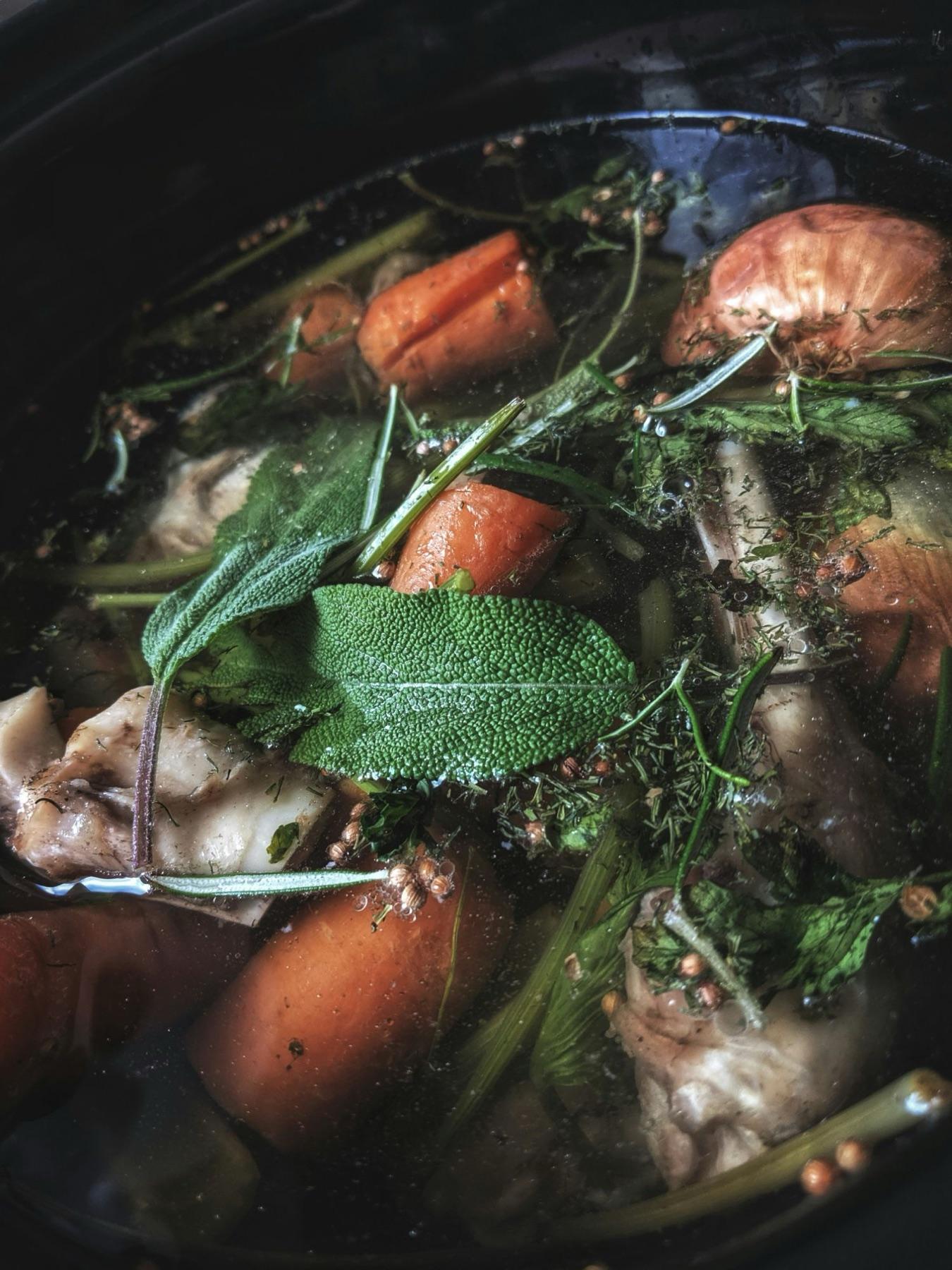
A nourishing food, not a cure
Bone broth can be part of a varied and balanced diet. It should not be presented as a cure or replace medical advice or treatment.
The 2025 review on the gut barrier
A review published in 2025 in Digestive Diseases and Sciences by Ayah Matar, Nada Abdelnaem and Michael Camilleri (a Mayo Clinic gastroenterologist) describes amino acids in broth such as glutamine, glycine, proline, histidine and arginine, and minerals such as calcium, phosphorus, potassium, magnesium and zinc.
The authors discuss the possible role of these components in the gut barrier, permeability, inflammation and nutrient absorption. It is a literature review, not a clinical trial with bone broth, and it does not allow any broth to be presented as a treatment. The responsible conclusion: the components justify more research, especially clinical studies with the whole food.
Cleveland Clinic
Cleveland Clinic considers bone broth a good addition to a varied diet: it can provide protein, amino acids, fluid, electrolytes and the collagen that cooking turns into gelatine.
It also points out two limits: there is little clinical research done directly with bone broth, and composition varies widely between recipes, bones, cooking times and batches. There is no universal dose; each broth has to be judged by its actual composition.
Harvard Health Publishing
According to Harvard Health Publishing, bone broths on the market may provide around 8 to 10 g of protein per cup, with wide variation. It also warns that broth should not be seen as a main source of calcium, magnesium or phosphorus: these minerals are present, but usually in small amounts compared with daily needs.

Common claims: what is known
- “Broth restores your joints”
- Cooking turns part of the collagen into gelatine and releases amino acids. But many of the studies with results on joints or osteoarthritis used concentrated hydrolysed collagen supplements, with doses and composition different from broth.
- “Broth heals the gut”
- Glutamine, glycine and other amino acids take part in functions linked to the gut lining, which is why they are studied. That does not allow anyone to say a broth heals gut permeability or inflammatory bowel disease.
- “Collagen in broth erases wrinkles”
- During digestion, collagen and gelatine are broken down into peptides and amino acids that the body uses as it needs, with no guarantee they go to the skin. Studies with collagen supplements do not prove the same effect for broth.
- “It is a great source of minerals”
- Broth contains minerals from bones, tissue and other ingredients, but in variable and often low amounts compared with daily needs. Without analysis, no broth should be presented as a source of calcium or magnesium.
- “If it sets, it has a lot of collagen”
- Setting shows that cooking extracted gelatine from the tissues, but it is not a measurement. Two broths can both set and have different concentrations; only a laboratory analysis gives grams of collagen.
And Terramay broth?
We state what is measured: 9.5 g of protein per 100 g, that is 24 g in a 250 g serving, with about 40% of the energy coming from protein (high protein). Minerals and collagen will only be stated after laboratory analysis.
The institutions and authors cited have not assessed or endorsed Terramay broth; this guide summarises published research.
Discover Terramay bone brothSources
- Matar A, Abdelnaem N, Camilleri M. Bone Broth Benefits: How Its Nutrients Fortify Gut Barrier in Health and Disease. Digestive Diseases and Sciences. 2025;70(6):1951-1961.
- Cleveland Clinic. Why Bone Broth Is Good for You (and How To Make It).
- Harvard Health Publishing. Savoring the benefits of bone broth: Worth a taste?
- Regulamento (CE) n.º 1924/2006 relativo às alegações nutricionais e de saúde sobre os alimentos.
This content is nutrition information and an editorial summary of available research. It does not replace medical advice, diagnosis or treatment.